Saturday, 18 February 2017

Wilderness Chronicles


Every trip to Tadoba Andhari Tiger Reserve (TATR) has been an exhilarating experience for me. I always have trouble sleeping the night before the trip. I have been there innumerable number of times, but this happens to me every time! Wilderness always beckons! I still can't establish what disturbs my sleep. It could be the rustic nature of the tiger reserve, or the fact that nothing goes as planned when you go into the wild. I don't deny it, it could also be because I am a huge wildlife lover and so when it comes to a trip to the wild, I am always excited!

In the wild, opportunities present themselves when you least expect it!  Sometimes I have come back home disheartened without spotting a tiger. Other times I have come home talking about how we spotted the animal, what it was doing when we spotted it, and other details. My wife always smiles knowingly, patiently waits till I finish and then asks me what I want to have for lunch. She knows the animal she married would surely be hungry after a long trip!

My perspective is different now, I am at peace even on a bad day. Patience has definitely taken precedence! With all the efforts you put in, all the calculations you make, at times you fail to spot the animal you want to. The animal seems to be one step ahead of you somehow. Reminds me of what my guide told me once. "Sir don't think you missed the animal. The animal always spots you much before you can spot it. The forest is its home, and so it would have seen you already and disappeared into the bush!" So true! It really makes you feel how small you are after all, you have no importance in the jungle. You are a disturbance to the ecosystem. That's the reason why you have to be very careful when in the jungle. Whisper as much as you can, refrain from talking loudly and importantly remember that animals always have the right of the way!

So how do you stay positive? The answer is, have no expectations. Focus on every small creature you can spot and keep yourself busy. My way of doing it is by trying to spot as many birds as I can. Recently I have started to photograph birds. Birds are plentiful in all ecosystems and photographing birds keeps your mind busy. Bird photography is not easy, it needs a lot of concentration, skill and patience. That's my key to staying happy when I go into the wild!

In the picture below you see a Lesser Adjutant Stork. Never seen this bird in the wild. This was the first time for me. Its important to note their conservation status. They are threatened like thousands of other species.


Birds make good subjects, you can take a lot of pictures when they are perched, but knowing their behavior, you know they will fly and you can take a picture of their flight if you are patient. Below are pictures of the Siberian Stonechat. They are a part of the fly catchers family of birds.


A green bee-eater perched comfortably in the afternoon sun, hoping for some bees to fly past! These are really beautiful to watch, their green color stands out in the summer as the grass is mostly brown.


While you travel deeper into the forest, you see meadows and in the meadows you normally find spotted deer and Sambar. Below is a spotter deer on high alert, ready to leap away from our presence. Reminds me of the dialogue in Walt Disney's movie "Bambi" - "Man is in the forest".


There is one animal the tiger also fears, the great Indian gaur. A huge creature, can overturn a jeep with one head butt. This specimen below is only a sub adult, but pretty impressive already!


Its wonderful to see a young fawn frolicking about. They don't go too far, the mother is always about for protection. Their strength comes from numbers but the young are easier to catch during a chase. That's how life is in the wild, ' survival of the fittest '


While you wait by a water body to sight some animal that might come to have a drink, you cannot help but notice bird activity all around. Birds of all sizes come by to have a drink, these scaly breasted munias were in a group having a drink. One of them suddenly decided to take off for some reason.


I always wanted to take a picture of an owl. I have been to habitats where Owls live but I always failed to spot one. Maybe I chose the wrong time in the day or I was in the wrong place. I was discussing this with friends who had come with me. I got some good tips. I this case this brown fish owl was perched beautifully for us to take a picture. He was half awake, and I got some shots of him closing his eyes too. Maybe it was a very drowsy morning for him.


I think the crested serpent eagle is an amazing bird. This specimen was very handsome I thought. He had beautiful eyes and impressive talons. If you notice, he has his kill in his right leg. He then started to eat his kill, might have been a water snake from the nearby rivulet.


Talking of the apex predator, you always want to spot the tiger in the middle of the road, so you get a good shot, or maybe very close to where you are but its never easy. You might find the animal sleeping amidst some ragged rocks like in the picture below. Maybe in the shade of a tree on a hot afternoon, or near a stream just after the animal finishes a meal. In this case, we waited for a good two hours, it was soon time for us to leave but the tiger was still snoozing among the rocks. We couldn't wait longer and the animal didn't seem to have any plans of waking up or getting out of its comfort zone.


The next day morning safari turned out to be lucky for us. We spotted a male tiger near a water body called Pander Pauni. He was on the move, maybe wanting to explore his territory. The below picture is when he got up to explore the area around him. He then moved into the bush and for sometime we lost him. When this happens, all the jeeps with their guides and drivers get into a tizzy, trying to get into the most advantageous position to spot the tiger at close quarters. Some experienced guides also tend to predict where the animal might go next, but finally the animal decides! 


We took a different route expecting the tiger to emerge from the fire line directly walking towards us but in fact he walked back and did quite the opposite. We got the news and went there just in time to see him smelling and scent marking his territory. Tigers are known to scent mark their territories. They are very territorial and sometimes even end up killing a rival who is up for the challenge. A territory around a water body obviously means good grass cover due to the water supply, which will eventually attract deer,so food is served! Deer also attract tigresses who are expert hunters and so a mate too if he is lucky! Sometimes tigers have more than one mate in their territories. They are also known to walk about 45-50 Kms a day looking for food or generally guarding their territories.


This young male is called Matkasur for some strange reason. I am sure the forest department has some alpha numeric numbers given to an animal just to keep track, but the locals always come up with some very unique names. Some names that I remember are - Wagdoh, Telia female, Maya, Choti Tara, Shivaji, Tara. There was one called Namdev, this tiger is known to have mowed down a man named Namdev and so he was called by that name. Namdev had moved into the buffer area of the forest and that was the last I heard of him. All these tigers are followed and their whereabouts carefully tracked by the forest department. They have a responsibility and they are questioned if the count reduces. In fact the department is under huge pressure now a days.


This picture (Below) of Matkasur is my favorite. All of us got these pictures as we were positioned just ahead of the tiger.


The below shot was the last shot I got of his. He later disappeared into the bush, didn't see him again that afternoon though we hoped to spot him again! 


Hope to catch more of wildlife on my next trip! Till then keep reading and I will keep blogging!


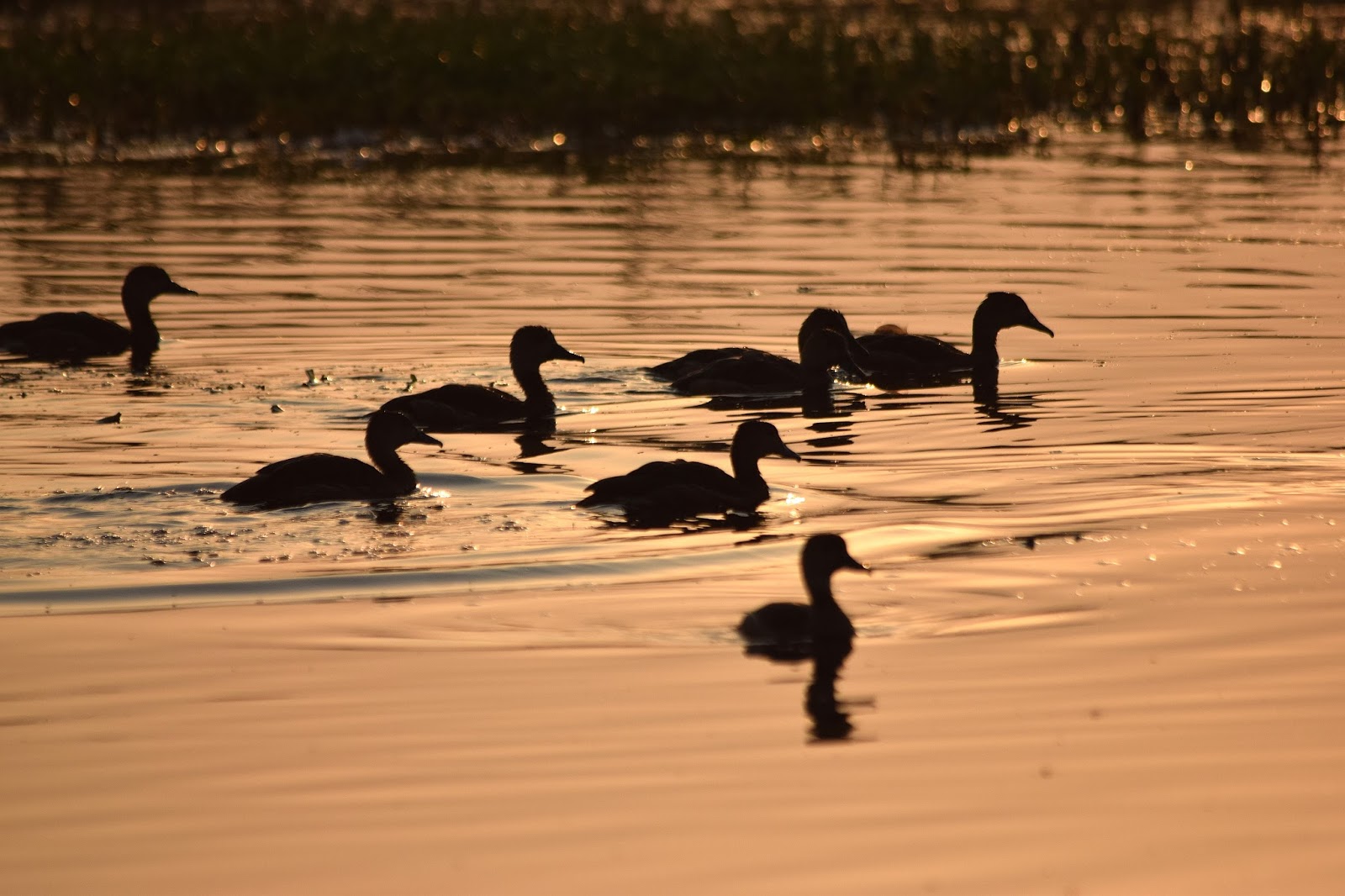
Sometimes an early morning trip to a nearby wilderness spot can give you very good pictures. In this case it was Ameenpur Lake. This was a early day for me, woke up at about 5 and got to the spot at about 6 AM. While I waited by the lake to get some good bird shots, I noticed some spot billed ducks wading through the water, got some great silhouettes of the birds.



As the sun rose and threw light on all the subjects, some of them started to reveal themselves. This purple heron decided to fly close to where I was and was landing, I got some good shots of the bird in flight. Thank God I had the right shutter and aperture settings.
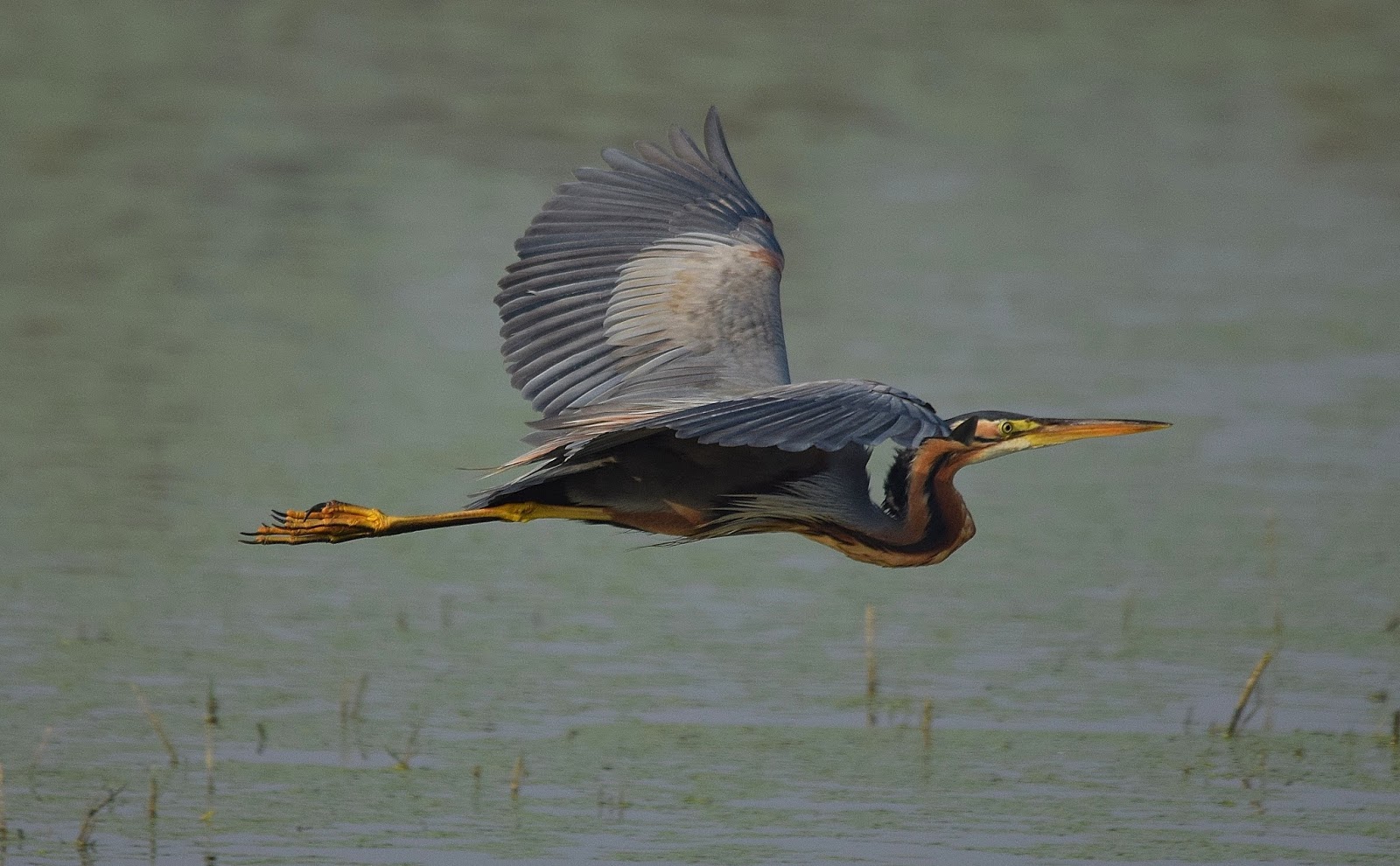


The picture below was taken just before it perched on a rock close by.


This common hawk cuckoo was a good spot. It had just perched on the stone when I noticed him and approached him to take a good picture.


Green bee-eaters are nice to photograph. They are always actively catching their prey and eating continuously.


Below, a grey heron was preening when I caught him. I came very close to him but soon saw him fly to a different spot. I was lucky to get him when he was in flight. Its always a good idea to get out early in the day with your camera and go close to a water body in the city. You will find a lot of opportunities to photograph wild life!


Tuesday, 24 January 2017

Into the Wilderness


Man - Scientific name 'Homo Sapiens' meaning "Wise Man" in Latin is a social being much like an Ape. But he is the single, most successful and dominant species that roamed the earth, so he says! He adapts, survives calamities and uses his intelligence to progress, multiply, and master every terrain on earth. 

Man's technology today has no bounds. Technology has made unthinkable things turn into reality. Reaching the moon, travelling to space, conversing with people miles away, travelling in automobiles, decades back these were mere dreams but today all is possible!! In the process of achieving these amazing feats he has lost a lot. Man today seems to have lost his morality. He has lost respect for other species that share the world with him. Whaling, mass killing of wild animals and deforestation have resulted in driving a lot of species to extinction. Some of them already became extinct decades back.

Just for the record - of the 44,838 species assessed worldwide using the IUCN Red list criteria, 905 are extinct and 16,928 are listed as threatened to be extinct. Millions of species still need to be assessed to know their status. As a result, the number of extinct and threatened species is definitely much higher than the current estimate.

Time is running out and soon some of the species that we see our forests inhabit will disappear in front of our eyes. Sometimes I wonder if my sons will only see pictures of these beautiful creatures in story books and magazines!!

Can you recognize this animal? Try!


It was called the Thylacine or Tasmanian Tiger. The species was last seen in 1936.


Our Indian forests are still rich with flora and fauna. Luckily we still have access to these animals today. Shouldn't we make the most of it?

Being a wildlife photographer and an avid traveler, I choose to spend a lot of time in the wild and in small wild patches that have managed to survive the wrath of man in our overpopulated cities. In one such trip I happened to capture this jaguar, it almost felt like he was saying; " I am also God's creation, don't I have the right to live?"


India is the home for 70 percent of the world's tigers. We are lucky as this majestic animal still lives in the wild of our country! The Indian government established 50 tiger reserves for the protection of these majestic creatures through project tiger in 1973. Thanks to these efforts, the official count for tigers in India was 2,500 in 2016. 

Tadoba Andhari Tiger reserve is one such amazing wilderness place, it is a must see. Tadoba and that area of Maharashtra is said to be the inspiration for Rudyard Kipling's famous book, the Jungle Book.

There were 88 tigers, as of August 2016 in the reserve, and 58 in the forests immediately outside the reserve. It is the largest national park in Maharashtra. Total area of the reserve is 625.4 square kilometres (241.5 sq mi). This includes Tadoba National Park, created in 1955 with an area of 116.55 square kilometres (45.00 sq mi) and Andhari Wildlife Sanctuary created in 1986 with an area of 508.85 square kilometres (196.47 sq mi). The reserve also includes 32.51 square kilometres (12.55 sq mi) of protected forest and 14.93 square kilometres (5.76 sq mi) of other areas.

Densely forested hills form the northern and western boundary of the tiger reserve. The elevation of the hills ranges from 200 m (660 ft) to350 m (1,150 ft).

To the southwest is the 120 ha (300 acres) Tadoba lake which acts as a buffer between the park's forest and the extensive farmland which extends up to Irai water reservoir.This lake is a perennial water source which offers good habitat for Muggar crocodiles to thrive.Other wetland areas within the reserve include the Kolsa lake and Andhari river.


Tadoba reserve covers the Chimur Hills, and the Andhari sanctuary covers Moharli and Kolsa ranges. It’s bounded on the northern and the western side by densely forested hills. Thick forests are relieved by smooth meadows and deep valleys as the terrain slopes from north to south. Cliffs, talus and caves provide refuge for several animals. The two forested rectangles are formed of Tadoba and Andhari range. The south part of the park is less hilly.

Apart from the keystone species, the Bengal tiger, Tadoba Tiger Reserve is home to other mammals, including: Indian leopards, sloth bears, gaur, nilgai, dhole, striped hyena, small Indian civet, jungle cats, sambar, spotted deer, barking deer, chital, chausingha and honey badger. Tadoba lake sustains the marsh crocodile, which were once common all over Maharashtra.

Reptiles here include the endangered Indian python and the common Indian monitor. Terrapins, Indian star tortoise, Indian cobra and Russel's viper also live in Tadoba.

The lake is an ornithologist's paradise with a wide diversity of water birds, and raptors. 195 species of birds have been recorded, including three endangered species. The grey-headed fish eagle, the crested serpent eagle, and the changeable hawk-eagle are some of the raptors.

Other interesting species include the orange-headed thrush, Indian pitta, crested treeswift, stone curlew, crested honey buzzard, paradise flycatcher, bronze-winged jacana and lesser goldenbacked woodpecker. Warblers and the black-naped blue flycatcher exist here and the call of the peacock may often be heard.

74 species of butterflies have been recorded including the pansies, monarchs, mormons and swordtails.

Insect species include the endangered danaid egg-fly and great eggfly. Dragonflies, stick insects, jewel beetles and the praying mantis are other insects located in the reserve.

The signature spider, giant wood spider and red wood spiders are often seen during the monsoon and soon after. Some hunting spiders like the wolf spiders, crab spiders and lynx spiders are also common.

Below is one of the many beautiful pictures I have taken at Tadoba. This is a young female about a year old then, watching her sisters from one side of the road. She was hardly 10 feet away from our jeep. One of the other sisters was patiently watching me while I was photographing this tigress. I only realized later and had to move carefully without being too noisy with my gadgets to capture her. She then nonchalantly walked past the jeep ( just 3 feet away from me ) and went into the nearby thicket. One amazing experience!


Below is the picture I managed of the second sister as she walked past. She was so close and worse closing in on me that I didn't get time to focus well. I took some random shots and thank God I got them right. 


This third sister  ( in the above picture ) was the reason the first one had paused on the road. She was watching her whereabouts and waiting to see what her next move was going to be. They were playful, might have had a good meal recently. There were totally four, (in the picture below ) is the fourth one. She was way too close and my 70-300 mm lens could hardly get a shot. I had to change to manual focus mode to click her. All I managed to get was that beautiful pattern on her skin. These sisters have been video-graphed and also aired on Discovery Channel. They went on to hunt together till they were two years old or so. They are popularly called the 'Telia sisters'. They were born near the Telia lake and hence that name. You still see them around but not together. Adult tigers take over new territories and fiercely guard them. I think these tigresses must have littered more than once, adding to the healthy population of tigers in the reserve.


As the heat of the day dies down, cool winds blow, taking away discomfort and sweat off the faces of the tourists. Towards the evenings you see a lot of spotted deer making it back to the safety of their herds. Their strength is always in numbers. No matter how careful they are, the master predator, the tiger is not lurking far behind. He always catches up. This female deer ( in the picture below) is jealously guarding her offspring as she crosses the dirt path. You can see her watchful eye looking at me as she helps her fawn get across. 


Tadoba Andhari Tiger Reserve ( TATR ) opens in October every year and closes down in June allowing things to settle down after tourists come and go and of course for the rains to rejuvenate the forest. If you are in the park in the winter months, the morning safaris would look like this. (see picture below). The effect is created with sunlight, dust from the moving vehicles and presence of mind! Always advisable to keep your camera ready. The mornings are chilly and you need to wear warm clothes in the winter months to feel comfortable. Spotting wild life is always fun because there is no guarantee what you might see and when! 


The Indian Pea Fowl is always lovely to spot. The males with their plumage add to the beauty of the forest.


The chatter of the Hanuman langur breaks the silence of the forest once in a while. This young fellow seems to be communicating to the other members of his group, now don't ask me what about!


In one of my trips to the park we had the opportunity to look upon this gorgeous juvenile, changeable crested hawk eagle. He was perched on a branch right above us. The bird has a changeable crest on its head and hence that name.


On another trip into the forest we spotted this amazing Shikra. Another bird of prey. What really attracts me to these birds are their eyes, their talons and their deadly beaks. They are killing machines! An aerial attack can cause serious damage.


You can also spot many species of nocturnal birds including owls if you are a fan of nocturnal birds and animals. I have seen civet cats, leopards and boars in the nights. Sometimes at night you hear shrieks and sounds that you cannot comprehend. You can only guess what they might be. Some of my friends prefer not to guess, they simply go to bed. I on the other hand try my best to strain my ear to hear more!


The picture that you see below has an interesting story attached to it. In one of the trips into the forest, we stopped along with a lot of other jeeps to spot something in the bushes. The guide insisted there was a leopard in the thicket. I was not too sure. He showed me where he was more than once but for some reason I was not able to spot him. Camouflage, yes. But the thing is I wanted to see him, not lose him in the thicket. After 15 minutes of continued efforts and strain to my eyes, I finally caught a glimpse of him. In fact the reason I saw him was because he moved! I finally got this picture of him. I call him the 'master of disguise'!


On another occasion, we saw Maya, the gorgeous tigress. She was sitting in front of us for at least an hour. She is known to be very comfortable in the presence of tourists. She seems unperturbed by jeeps, tourists or the sounds of cameras clicking. She is definitely a sight. All the time she was sitting there, the only movement we saw was of her ears. Ever vigilant, the ears were constantly scanning for sounds from the forest. She was also constantly twitching her ears to avoid the flies. Might have been her siesta time!


Contact me if you like to join me next time : Pavan Kumar, at panybravo@live.com, Mob # 9052301555, or Landline # 040-24078915. Hope to hear from you soon!